

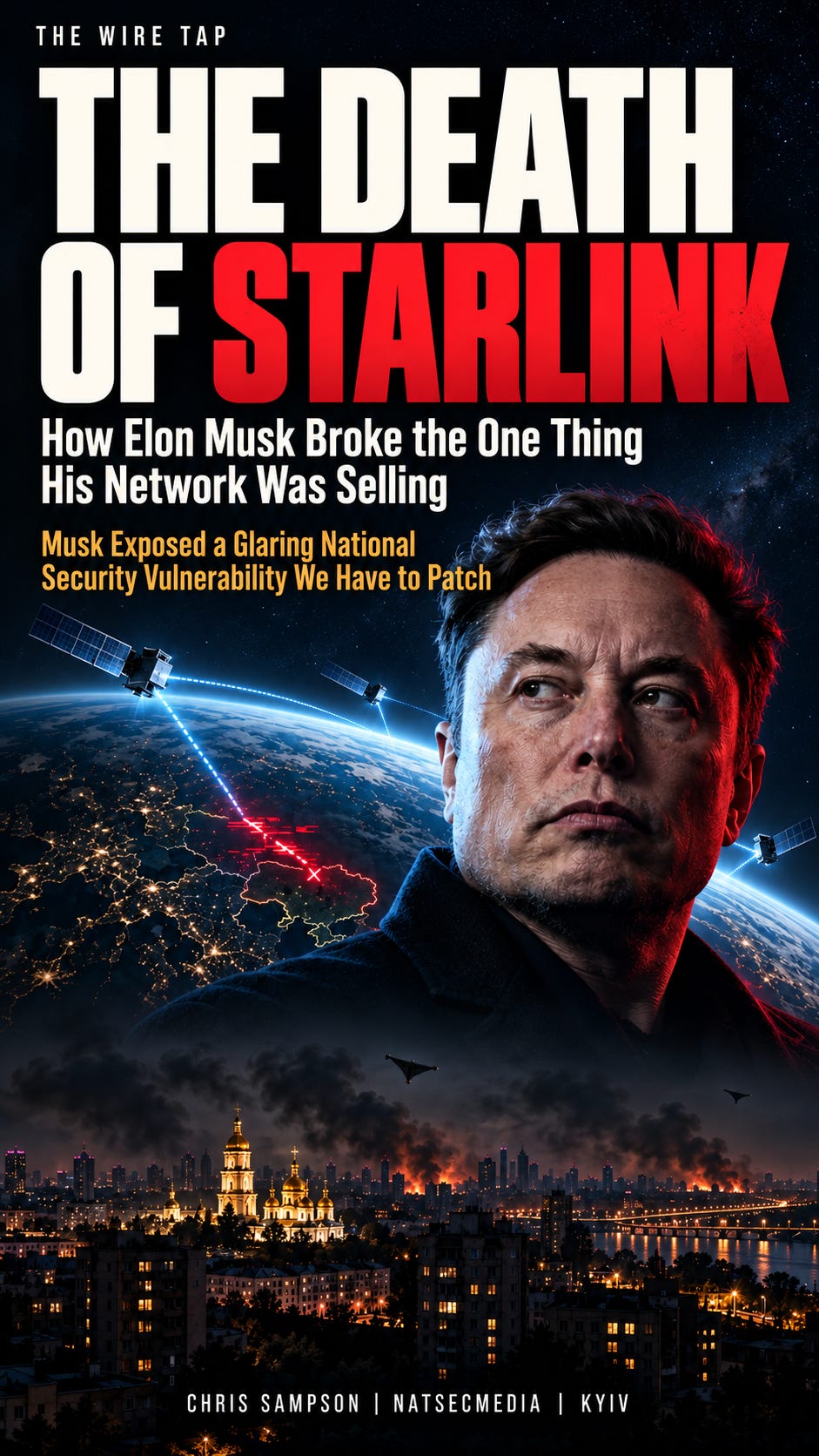
On Wednesday, October 21, the president of the United States, Donald Trump, picked up the phone and asked a private citizen to give Ukraine’s drone pilots their internet speed back. Yes, really.
At least that's what U.S. officials told The Wall Street Journal. According to their reporting, Donald Trump called Elon Musk asking him to lift the restrictions on Starshield, the military version of Starlink used by Ukrainian units to guide fast interceptor drones against Russia’s Shaheds. These officials said Trump told Musk he was frustrated the service was still capped at around 100 miles per hour.
For context, it isn’t that Ukraine’s air defense switched off. Its mobile fire teams, missiles, guns, and radars kept working, as they always do. That cap took away one specific capability: the system for the satellite-guided interceptors fast enough to catch the jet-powered Shaheds now being launched at our cities.
On the morning of Saturday, October 24, Zelenskyy confirmed on Telegram that it was restored: “The speeds are now where they need to be.” Ukraine’s Defense Ministry said Starshield was working above 400 kilometers per hour again.
Now, think about the consequences of that phone call:
Ukraine’s defense technology adviser describes Starshield as a package managed by the Pentagon and without a doubt, the Pentagon is Elon’s largest customer. But, then the commander in chief did not send an order down the chain of command, something designed into our system of defense (precarious as that is right now) No, instead, je called the man who owns the communications company and asked him permission. Asked on October 22 whether he had made that call, Trump said, “I don’t want to comment on it,” and then, “The bottom line, he put it back. Whether I called or whether somebody else called, doesn’t make any difference, I guess.” I can affirm, it makes a great deal of difference to the people living under the drones.
It was hours after Zelenskyy’s announcement that Musk switched his story and said the decision was his own. “Ukraine military violated Starlink terms of service and used it for offensive drone strikes to kill people,” he posted on X. “That loophole was closed last week.” Ten days earlier, on October 14, he had written that limits on Starshield are “decided by the US military and ultimately POTUS.” On October 24 he added a message for his critics: “I have nothing but UTTER CONTEMPT for the virtue-signaling evil warmongers who push for endless slaughter and offer no realistic solution to the conflict. May you burn in hell.” In March 2025 the same man had promised: “To be extremely clear, no matter how much I disagree with the Ukraine policy, Starlink will never turn off its terminals.”
Don’t be distracted though, because Russia did not pause while Washington and Musk sorted out their story. On the same night the cap took effect, Russia struck all three thermal power plants here in Kyiv, and more than 600,000 people lost electricity. On the night of October 20 to 21 it launched 186 attack drones, 88 of them jet-powered, along with Iskander-K cruise missiles.
Four people were killed, two of them found in a 24-story apartment building in Kyiv’s Sviatoshynskyi district. On October 22, at lunchtime, a jet-powered Shahed and a Banderol missile hit the central market in Lozova, in Kharkiv region, killing two women and wounding 36 people. On October 16, Zelenskyy said that because of the speed cap, Ukraine “could not shoot down some of the jet-powered Shaheds” that “kill our families.” No one has published a count of deaths caused by the cap, and I will not invent one. But the jet-powered Shahed is the exact weapon the throttled interceptors were built to stop.

To be clear, the satellites are still in orbit, and yes, Ukrainian soldiers are using them as I write this. What died in October is Starlink’s credibility as military infrastructure, a service a government can count on when lives depend on it. That damage reaches far beyond Ukraine. Every government that has let its defense run through one company’s satellites, under one owner’s terms, while officials give conflicting answers about who holds the switch, has the same weakness.
Musk exposed it.
Swapping him for a more agreeable billionaire would leave it exactly where it is. This piece lays out what happened, what it cost, who is building around it, and what Ukraine, Europe and the United States have to fix without breaking the defenses that are working today.
Ten days at reduced speed
Some Ukrainians saw it coming. On October 11, Volodymyr Stepanets, founder of Narodnyi Starlink, or “People’s Starlink,” a nongovernmental group that helps Ukraine’s armed forces acquire and operate terminals, sent a confidential memo to military officers across the country. The Atlantic’s Simon Shuster and Isaac Stanley-Becker obtained it. The memo pointed to Trump’s decision that week to ease sanctions on Russia and buy its diesel, warned that Musk might soon restrict service, and told users to “keep all communication alternatives to Starlink on standby, ready for immediate use, and develop contingency plans.”
On the night of October 13 to 14, the terminals Ukraine’s drone and interceptor units rely on began dropping their connections whenever they moved faster than 160 kilometers per hour, about 100 miles per hour.
Units noticed before anyone announced anything.
Serhiy Sternenko, the Ukrainian activist who works closely with drone units, was first to report on October 14 that SpaceX had throttled service above a set speed and that several critical missions had been disrupted.
Serhii “Flash” Beskrestnov, Zelenskyy’s adviser on defense technology, confirmed it, said Ukraine’s forces got no advance warning, and warned that the interceptors used against jet-powered Shaheds depend on the link.
Ukraine’s 7th Corps reported communication failures in the Huliaipole sector. A Defense Ministry source said logistics, drone operations and medium-range drone strikes were all affected.
Drones that normally fly fast had to fly slower, which the Associated Press noted made them easier for Russian forces to target or evade. Two people familiar with one mission told The Atlantic the outage cost Ukraine naval drones in the Black Sea.
The tech reality behind which system is in use: The cap hit Starshield. Commercial Starlink had long carried speed limits in Ukraine. Starshield had not. Beskrestnov described it to the AP as a package managed by the Pentagon and offered to partner militaries, with separate fees and terms and a more stable, higher-priority connection, and he called it the backbone of Ukraine’s drone operations. The numbers explain why the cap mattered. A jet-powered Shahed flies at more than 400 kilometers per hour. An interceptor that loses its link above 160 cannot chase it down.
An interceptor that loses its link above 160 cannot chase it down.
While most officials cited the 160 figure. Zelenskyy said the speed available to the interceptors fell to 70 kilometers per hour. That gap has not been resolved. He added a detail that deserves attention: Ukraine had tested the same equipment in EU countries, where no restriction applied and it worked above 180 kilometers per hour. He concluded the limit was a planned operation, not a technical fault, and told NBC News he believed it was a “message from the American government.”
Additionally, Beskrestnov told AP that connection outages came on top of the cap, and that SpaceX fixed those once Ukraine raised them, while leaving the speed limit in place. Ukraine’s Defense Ministry said service resumed on October 15, however with the cap still on. Then, Zelenskyy’s office said it was still throttled on October 21. On October 23, five Ukrainian officials told Reuters the restrictions remained despite Trump’s assurances, and Beskrestnov posted: “We are currently not observing any lifting of speed limits on Starlink.” Full speed finally came back on October 24.
Who ordered it
Over those ten days, the people involved gave the public a series of answers that do fit. Sorry, someone is lying.
Musk went first. On October 14 he wrote that limits on Starshield are “decided by the US military and ultimately POTUS,” and drew a line between Starshield and commercial Starlink, which he described as owned and controlled by SpaceX and usable only for civilian or defensive purposes. The Journal later reported that Trump and Musk spoke about Ukraine and Starlink hours after the slowdown became public that day. On October 15, Musk posted: “And so the slaughter continues.” Then: “Time for Zelensky to go.”
The anonymous accounts began the same day. Reuters, citing two U.S. officials and a Western official, reported on October 15 that the Pentagon had received notice from inside the White House that Starshield needed to be slowed. A senior Ukrainian official said Kyiv had been told it was a White House decision. A senior U.S. official said no such request was ever made by the president. On October 16, The Telegraph, citing four sources, reported that Musk had brought the idea to Trump and Trump agreed. Another senior source told the paper both men were in on it.
Trump spoke on camera outside the White House that day: “Well, I don’t know if it was anybody, but it wasn’t me, and I don’t think it was Elon. And from what I understand, it’s the same as it’s always been.” On October 18, Secretary of State Marco Rubio suggested Ukraine had never had Starshield access at all, which conflicts with Beskrestnov, Ukraine’s Defense Ministry, Zelenskyy, and Musk’s own post four days earlier. On October 19, Trump said: “I don’t know who it was, but I’d like to find out.”
On October 20, the Journal reported that Musk ordered the slowdown after discussing it with Trump and other senior officials. CBS News, citing people familiar with the matter, reported that Musk had been trying to learn the president’s position and dislikes his company being seen as profiting from the war. The same day, Defense Secretary Pete Hegseth told reporters: “We haven’t pulled anything back. There are terms of service that ultimately need to be complied to, and that’s where Starlink has the option to make those decisions.”
On October 21, in India, Rubio said decisions on Ukraine’s access rest with SpaceX and Musk under a private commercial contract, and called the question of whether the administration knew in advance “irrelevant.” Trump said that day: “I was not involved.” According to the officials who spoke to the Journal, that was also the day he called Musk to have the cap removed.
On October 22, Vice President JD Vance offered yet another frame: “It’s completely understandable that he doesn’t want to get in the middle of a war without the U.S. government effectively directing him on what to do.” And: “I don’t think this is about Elon. I think it’s fundamentally about what America’s policy in Ukraine and Russia is going to be.”
Then came Musk’s October 24 posts claiming SpaceX had closed a loophole.
Lay Musk’s own statements next to each other and the tension is plain. On October 14 he put the authority over Starshield’s limits with the U.S. military and the president.
On October 24 he described the cap as SpaceX enforcing its own terms. Those two statements could both describe the same event only if the government directed or approved what SpaceX then enforced. If that happened, then Hegseth and Rubio, who presented it as SpaceX’s call alone, left the government’s part out of their public accounts.
If SpaceX acted alone, then Musk’s October 14 statement pointed at the president for a decision his own company made. The public has been given no version in which everyone told the whole truth. As for the March 2025 promise that Starlink “will never turn off its terminals,” it holds only on a technicality. The terminals stayed on. They were capped below the speed needed to catch a jet-powered drone.
Every version agrees on one point. The cap went on without warning to the country whose cities it helped protect, and it came off, by the Journal’s account, when the American president asked a private citizen to remove it. Ukraine was not in the room for either decision.
The loophole
What loophole did Musk mean? Here the record splits, and readers deserve both sides in their own words.
Sternenko, answering Musk on October 24, said it was “technically impossible to use civilian Starlink specifically to carry out missions with drones.” Since February 2026, he explained, civilian and military users in Ukraine can register only stationary terminals under a “white list” system, and a terminal must be on a special list and connected to military Starshield to work on the move. Every drone mission that needs a satellite link, he said, runs through Starshield. Beskrestnov called Musk’s remarks “very strange” and said commercial terminals in Ukraine are speed-limited and do not work over Russian territory.
The Atlantic, on October 28, reported something different about the overall picture. Citing Ukrainian officials and experts, it said Starshield terminals make up “less than one percent of all the terminals in the war zone,” and that the rest are retail Starlinks, “including thousands bought in bulk for Ukraine by the governments of Poland and Germany.”
Ukraine’s forces, the magazine wrote, “had no choice but to break the rules of Starlink service,” and Musk’s company “did not enforce that rule in Ukraine.” A person who has negotiated with SpaceX on Ukraine’s behalf told the magazine: “Officially, these were supposed to be for humanitarian use. But everybody knew that they are going to the military.” A senior U.S. military officer said Ukraine is “using it for everything. Drones, command and control, tactical communication on the battlefield.”
These accounts describe different things, and they should not be blended. A share of all terminals in the country tells you nothing on its own about which service a particular interceptor drone was using on October 14. Sternenko is describing the rules for terminals that work on the move. The Atlantic is describing the much larger mass of retail hardware across the war zone. No Ukrainian or American official has publicly explained how the two fit together.
The Atlantic’s reporting does settle one thing about Musk’s statement that using commercial Starlink for drone strikes “has never been allowed.” If SpaceX spent three years selling and servicing terminals it knew were going to Ukraine’s military, the ban existed on paper while the company took the money.
The pressure around it
The cap landed in the middle of a sustained American campaign to stop Ukraine from hitting Russian oil refineries.
On October 9, Senators Roger Wicker and Kevin Cramer visited Kyiv with two members of the House. According to the Journal, they proposed a deal: Ukraine pauses strikes on Russian energy facilities for 100 days, and in exchange Starlink coverage is extended about 300 kilometers into Russian territory, which would let Ukrainian forces hit the launchers firing missiles at Ukrainian cities. The Journal reported that Zelenskyy said he would accept those terms. That was a proposal, reported through the Journal’s sources, and it never took effect. It still showed that access to a capability Ukraine already depended on was being treated as a bargaining chip.
On October 10 and 11, according to the Financial Times, U.S. defense officials called Kyiv and European capitals, threatening to halt intelligence sharing and to block PURL, the mechanism through which European governments buy American weapons for Ukraine.
On October 11, Trump announced an energy ceasefire. Zelenskyy said the announcement was news to him. In the same stretch, Trump announced a deal for Russia to supply diesel to American and global markets, which Kyiv took as a betrayal. The Journal noted that both Trump and Musk publicly criticized Zelenskyy over the refinery strikes in the days before the slowdown.
Russia did not stop. On October 12 it struck six Ukrainian energy facilities in a single day. Zelenskyy said Ukraine got no timely warning of the Russian missile strike that evening, and none again on October 13. The Washington Post, citing a person familiar with the matter, reported that U.S. intelligence officials had warned Ukraine’s embassy that sharing would stop immediately if Kyiv kept hitting Russian energy sites, while noting that sharing had not been completely cut.
Trump said cooperation would continue. Zelenskyy told NPR the warning had gone to his generals, not to him. Kyiv Post reported that the Starlink restrictions coincided with a reported week-long suspension of U.S. intelligence sharing that left Kyiv without allied warnings of ballistic missile attacks.
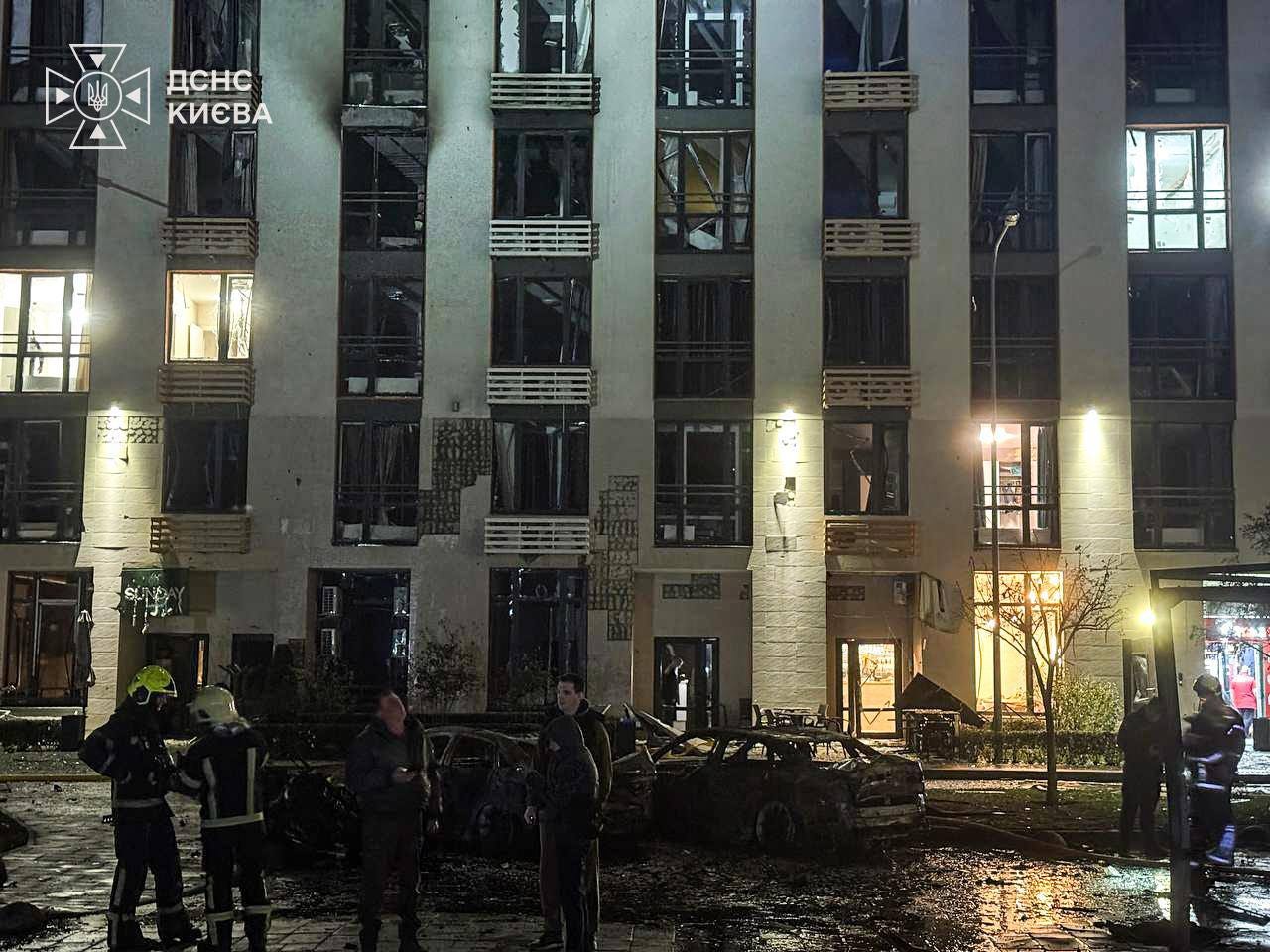
Then came October 14, when Kyiv’s three thermal plants were hit, the Starshield cap took effect, Musk posted that the president decides, and Trump and Musk spoke. On October 15, Zelenskyy told the Financial Times in London that the refinery pause was over. “We’re done,” he said, and the strikes resumed. On October 20, after meeting U.S. envoy Steve Witkoff in Oslo, Zelenskyy said intelligence sharing had resumed and that progress on Starlink and Patriot interceptors could come within 48 hours. The Trump call to Musk, by the Journal’s account, came the next day.
Intelligence warnings, weapons purchases and satellite connectivity are three separate pipes, run by different parts of the American system. Within five days, all three were reported to be in play over one Ukrainian military decision. Some of that was announced policy, some was reported proposals and threats, and some, like the missing missile warnings and the speed cap, actually happened. The timing is documented. A coordinated plan connecting all of it is not, and I am not going to claim one. The timing is enough to demand answers, and it shows how much of Ukraine’s defense depends on American discretion at several points at once.
What the cap cost
The documented costs are specific, and they should be stated without inflation. Missions were disrupted or canceled on October 14. Some units lost connection even below the cap. Interceptors could not close on jet-powered Shaheds. Helicopters used to hunt slower, propeller-driven Shaheds were affected. Beskrestnov noted that for many soldiers at forward positions, Starlink is also the only way to talk to their families.
On October 22, Michael Kofman of the Carnegie Endowment told the Journal that removing the throttle would do much to enable Ukraine’s strikes at operational depths and its effort to scale up jet-powered interceptors. That is a measure of what the cap had been holding back.
The deaths are harder to count honestly. Zelenskyy’s statement is that Ukraine failed to intercept some Shaheds it otherwise could have. Knowing how many people died from drones that got through because of the cap, rather than drones that would have gotten through anyway, requires air defense data that has not been released. What can be said is that a defensive tool was degraded for about ten days, during constant Shahed attacks, in the same stretch that Russia was hitting the capital’s power plants.
The money
The Atlantic reported that when U.S. military officials asked SpaceX about the outages this month, the company “advised switching to an upgraded contract to restore Ukraine’s access,” according to U.S. officials. Musk and SpaceX did not respond to the magazine.
There is a precedent from this year. In May, Reuters’ David Jeans reported, citing Pentagon documents and people familiar with the matter, that during the Iran war SpaceX argued the U.S. military’s drones belonged on its aviation tier, priced closer to $25,000 per terminal per month, rather than the roughly $5,000 per month the military had been paying for connection. Pentagon officials countered that the aviation tier was designed for aircraft, not drones that use a connection for minutes or hours. In the end the Pentagon agreed to SpaceX’s proposed increase, which nearly doubled the cost of each of its LUCAS attack drones. Musk called the Reuters story “false.”
These are different service tiers with different prices, and the comparison that matters is between them. Stepanets’s October 11 memo had listed that exact move among the ways Musk could restrict Ukraine: raise the price of Starshield service and force the U.S. government to pay or cancel. Beskrestnov told the AP that Ukraine had been asking whether it could move to Starshield’s aviation package, which carries no speed limit, and that it costs much more.
SpaceX went public in June at a valuation of roughly $1.8 trillion, according to The Atlantic, and Starlink revenue is central to the company’s value. None of this proves why Musk did what he did in October. It does show that the company that throttled Ukraine’s interceptors also sells the more expensive tier that would have removed the throttle, and that it has pushed a government customer up that ladder before.
Musk’s other war
Musk’s posts about this war follow a consistent pattern, and October fits it.
On October 3, 2022, seven months into the full-scale invasion, he posted a “peace” plan under which Crimea would be “formally part of Russia,” Ukraine would remain neutral, and occupied regions would vote again under UN supervision. “Russia has >3 times population of Ukraine, so victory for Ukraine is unlikely in total war,” he wrote. “If you care about the people of Ukraine, seek peace.” Zelenskyy answered with a poll of his own: “Which @elonmusk do you like more?”
On October 1, 2023, Musk posted a meme of Zelenskyy captioned: “When it’s been five minutes and you haven’t asked for a billion dollars in aid.” Presidential aide Mykhailo Podolyak replied that “any silence or irony towards Ukraine today is a direct encouragement of Russian propaganda.”
In February 2025, the attacks became a campaign. On February 20 he wrote that Zelenskyy “cannot claim to represent the will of the people of Ukraine” until he restores press freedom and stops canceling elections. “He knows he would lose in a landslide, despite having seized control of ALL Ukrainian media, so he canceled the election,” he posted. “In reality, he is despised by the people of Ukraine.” He accused Zelenskyy, without evidence, of running a “massive graft machine feeding off the dead bodies of Ukrainian soldiers,” and wrote of a 2022 magazine photo shoot: “He did this while kids are dying in trenches on the war front.” When X’s Community Notes corrected his claim about Zelenskyy’s approval rating, Musk said he would “fix” the feature.
On March 3, 2025, replying “True.” to a post that called Zelenskyy a dictator, Musk wrote: “As distasteful as it is, Zelensky should be offered some kind of amnesty in a neutral country in exchange for a peaceful transition back to democracy in Ukraine.” The same day he wrote that Zelenskyy “wants a forever war, a never-ending graft meat grinder,” and “This is evil.” By March 12, The Independent counted more than 600 million views on his posts about Zelenskyy since February, including one that read: “Ukraine needs to hold an election. Zelensky would lose by a landslide.”
This month he returned to it. On October 10, responding to video of Trump criticizing Zelenskyy, Musk posted: “Zelensky has gone too far.” That is an attack, not a demand. Five days later, the day after the cap took effect, came the demand: “Time for Zelensky to go.”
Musk has confronted Putin publicly. On March 14, 2022, in the third week of the invasion, he wrote: “I hereby challenge Владимир Путин to single combat. Stakes are Україна.” It was the clearest public challenge to Putin I found in his record. Seven months later came the peace plan that handed Putin Crimea.
In October 2024, The Wall Street Journal reported, citing current and former U.S., European and Russian officials, that Musk had been in regular contact with Putin and senior Kremlin officials since late 2022, and that Putin had asked him not to activate Starlink over Taiwan as a favor to Beijing. The Kremlin denied it. Musk did not respond to the Journal.
On October 28 this year, Putin said at a summit in Moscow: “Elon Musk is a genius, he’s just a real genius.” And: “We are in close contact with our American partners, including Mr Musk.” None of that proves Musk has acted on Kremlin wishes. It does show who is praising him while Ukraine counts the cost of his decisions.
In March 2023, the International Criminal Court issued an arrest warrant for Vladimir Putin over the unlawful deportation of children from occupied Ukraine. In the public record reviewed for this article, I found no call by Musk for the return of Ukrainian children taken by Russia, and no criticism of Putin over those children. In the posts I reviewed, his most prominent mention of children in this war came in an attack on Zelenskyy.
Set the record side by side. Elections Zelenskyy should hold, amnesty in a neutral country, “Time for Zelensky to go,” all presented as peace and democracy, all aimed at the leader of the country being invaded. I read it as regime-change language directed at one side of this war. The October cap belongs inside that record, not outside it.
Who holds the switch
Nobody elected Elon Musk to decide how fast Ukraine’s interceptors can fly. By his own October 14 account, he did not have that authority. He said the decision belonged to “the US military and ultimately POTUS.” When the Pentagon arranged to pay for Starshield service for Ukraine, Colin Kahl, then the U.S. undersecretary of defense, who negotiated it, told The New Yorker the purpose was to “prevent Musk from turning off the switch.”
The question of who could authorize a restriction on a military service in wartime, and with how much notice, is now in front of Congress. On October 15, nine senators asked the Defense Department’s inspector general to investigate: Democrats Jeanne Shaheen, who led the letter, Jack Reed, Dick Durbin, Chris Coons and Richard Blumenthal, and Republicans Thom Tillis, Susan Collins, Lisa Murkowski and John Cornyn.
They asked whether the administration or its contractors caused the Starshield and intelligence disruptions, whether the two were connected, whether Pentagon officials authorized or knew of the changes in advance, and whether SpaceX acted alone in a way that would breach its contract. They asked for a first briefing by November 1.
On October 22, Blumenthal, ranking member of the Senate Permanent Subcommittee on Investigations, sent letters to Hegseth and to Musk. He asked Musk nine questions, among them which capabilities were restricted between October 10 and 15, who ordered and carried out each restriction, whether Ukraine was notified, whether SpaceX can degrade service without Pentagon authorization, and the total value of SpaceX’s Starlink and Starshield contracts since fiscal 2020.
He set November 5 for written answers and November 12 for a briefing by SpaceX officials. “The events in Ukraine show how a single point of control can be turned against the forces that depend on it,” he wrote to Musk. To Hegseth he wrote that “a decision to degrade service, applied quickly and without notice, has disabled missions across an entire military theater.”
Those answers will tell us which of the public accounts was true. Either the U.S. government had a hand in restricting a military service its own officials then described as a private company’s decision, or a private company changed the terms of a war in the middle of it, for a country it is not party to, without warning the military whose missions it broke. Neither answer is acceptable for a system people’s lives depend on.
Europe moves
Europe has drawn its own conclusions, and some of them are now on paper.
On October 22, the Ukrainian and Finnish prime ministers signed seven agreements worth nearly €300 million, roughly $337 million, with Zelenskyy present. One commits Ukraine to make greater use of Finnish satellite capabilities through Nokia and ICEYE. The package also covers joint drone production in Finland, ten Dv12 diesel locomotives donated to Ukrzaliznytsia, critical infrastructure protection and gas storage.
The same day, Ukraine’s military signed a letter of intent with Nokia and ICEYE to explore a sovereign Ukrainian satellite communications network. That partnership was announced on October 1, two weeks before the cap. No scale, timeline or funding has been disclosed, and a letter of intent is not a contract. ICEYE’s chief executive, Rafal Modrzewski, said Ukraine needs “secure, sovereign and high-performance satellite communications systems that it controls.”
The European Commission said on October 14 that it is negotiating Ukraine’s full association with GOVSATCOM, the EU’s government satellite communications service, with commercial capacity possible from early 2027. Wild Hornets, which builds the STING interceptor, told The War Zone on October 20 that it will test alternatives and is rethinking projects that need high-speed flight with onboard terminals. “Depending on a single solution is very risky,” its spokesman said, adding that other Ukrainian companies are showing growing interest in Eutelsat. Eutelsat’s shares rose 19% on October 16 and about 25% over five days.
The statements came fast. On October 17, Zelenskyy said all of Europe had now seen that Starlink can be controlled from the United States and its speed restricted regardless of agreements and contracts, and that Ukraine is working with several countries, including France, on an alternative. He said Ukrainian officials had tried repeatedly to reach SpaceX through Defense Ministry channels and got no answer.
His deputy chief of staff, Ihor Zhovkva, told Euronews that “European countries must have their own corresponding system,” and that it would take less than ten or fifteen years, “and even faster than five,” without giving a date.
Kaja Kallas, the EU’s foreign policy chief, said at the October 16 summit that Starlink is really necessary for Ukraine, that Europe cannot replace it in the short term, and that “we need to fill these gaps as soon as possible.” She gave no budget or deadline.
Poland’s foreign minister, Radosław Sikorski, wrote to Musk on X on October 14: “As your European customers, we are watching you.” Dutch Prime Minister Rob Jetten, after talking with Emmanuel Macron, said Europeans should be able to provide more of these services in the not-too-distant future.
Latvia’s prime minister, Andris Kulbergs, said Europe has some comparable capability, but not enough. Renew Europe, the liberal group in the European Parliament, asked the EU on October 15 to give Ukraine temporary GOVSATCOM access, buy satellite services from Eutelsat, Hispasat and SES, and speed up IRIS². Its president, Valérie Hayer, called for “a European alternative to Starlink.” I found no on-record statement on alternatives since October 14 from Chancellor Merz, Prime Minister Starmer or Prime Minister Meloni. Britain’s defense minister, Wes Streeting, said only that he and Hegseth welcomed the restoration of service.
American industry noticed too. On October 22, Louis Mosley, Palantir’s executive vice president for the U.K. and Europe, told Reuters in Brussels: “What we have seen in the news over the past few days around Starlink is extremely concerning.” He said NATO’s Palantir-built Maven system cannot be switched off from outside. “There are no kill switches. There’s no ability for Palantir or the US government to reach in and switch it off.” Germany and France had already declined to adopt that system for their own forces, citing reliance on an American company. A defense contractor makes that kind of public promise because its customers are asking the question.
Much of what Europe is building started before October, and it should be described that way. According to the Bloomsbury Intelligence and Security Institute, Germany has committed €35 billion over five years to military space and has paid for Ukraine’s use of Eutelsat OneWeb for roughly two years. France raised its stake in Eutelsat to around 30% in 2025, signed a military contract worth up to €1 billion for priority access to OneWeb, and has budgeted €10.2 billion for military space from 2026 to 2030. Poland committed about 2 billion zloty, roughly $548 million, in September 2025 for six nationally controlled satellites.
On September 9, 2026, Prime Minister Donald Tusk announced a letter of intent between ICEYE and the state defense group PGZ for a military satellite system that “can and will be a Polish Starlink,” with a program running from 2026 to 2030 and no published budget. Poland has also supplied about 24,400 Starlink terminals to Ukraine, roughly half of those in the country, according to the same institute. That is the weight behind Sikorski’s warning. GOVSATCOM began operating in January 2026.
In mid-October, Bloomberg reported that the Commission was preparing to fast-track Project Bromo, the merger of the space divisions of Airbus, Leonardo and Thales. On October 4, ten days before the cap, Zelenskyy said Ukraine was developing a Starlink-like system, without naming partners, funding or a timeline.
Ukraine’s most ambitious independent effort has already taken a hard blow. The Ukrainian company Stetman, which in April 2025 licensed Swedish technology from Requtech to build terminals for OneWeb and Intelsat, set out to build a constellation of 360 low Earth orbit satellites with Denmark’s GomSpace, at a reported cost of over €1 billion.
This summer its founder, Dmytro Stetsenko, died at 46 of apparent heart failure, according to The Atlantic. The project continues under a new chief executive, Kateryna Diachenko, with full deployment planned to start in 2027. Stetman chose SpaceX to launch it. Ukraine’s own answer to Starlink is scheduled to ride Musk’s rockets.
Washington pushes back
Washington answered Europe with pressure. On October 18, the Financial Times reported that Andrew Puzder, the U.S. ambassador to the EU, warned European companies to expect retaliation that would be “very devastating” if the Commission goes ahead with a plan to reserve part of the spectrum used for direct satellite-to-phone service for European operators. He said the size of the American market gave Washington room to hit back and accused Brussels of protectionism.
The plan covers that specific band of direct-to-device spectrum. It is not a ban on Starlink, outside companies would still be able to operate, and it still has to pass the EU legislative process. SpaceX has argued it would mean poorer connectivity for Ukraine. Four days before the ambassador’s warning, the same company’s service to Ukraine’s military had been throttled.
On October 22, before a rally in North Platte, Nebraska, Vance mocked European countries that had spent years going after SpaceX with regulation and now rely on it. “Now they’re all running to SpaceX saying, ‘Please do what we need you to do,’” he said. “European political leaders love to bash the US allies that they depend upon so much.” He made Europe’s case for it. If depending on SpaceX means pleading with it, the fix is to stop depending on it alone.
What can replace it, and what can’t
Kallas and Zelenskyy are both right. Europe cannot replace Starlink quickly, and it is now trying.
Eutelsat OneWeb is the closest thing that exists. It flies more than 600 satellites in low Earth orbit at about 1,200 kilometers. Starlink flies at roughly 550 kilometers, with more than 11,000 satellites, according to The Atlantic. In September, Eutelsat ordered 229 more satellites from Airbus for €1 billion to replenish and expand OneWeb through 2034, and booked two Ariane launches for 2027 and 2028.
OneWeb already serves Ukrainian government and institutional communications, and Beskrestnov told the AP that Ukraine is exploring it. The limits are practical. OneWeb terminals are heavier, draw more power and cost more than Starlink hardware. They do not work with Starlink terminals, and there are no confirmed frontline drone deployments on anything like Starlink’s scale. Switching means buying, shipping, installing and training on a different class of equipment, and adapting the drones and mission planning built around the old link, all in the middle of a war.
GOVSATCOM can add secure government capacity, but it is not a mass drone link. IRIS², the EU’s multi-orbit constellation, is the long-term answer. Commissioner Andrius Kubilius has described a system of around 290 satellites to begin service in 2029, and has said Ukraine could take part. Four years is a long wait under bombardment. A sovereign Ukrainian network is what Zelenskyy has promised and what the Nokia and ICEYE letter begins to explore, and nothing public yet tells us when it would work or what it would cost.
There is also the problem of getting anything into orbit. Roughly 90% of all the mass delivered to orbit travels on SpaceX rockets, The Atlantic reported, and OneWeb has relied on SpaceX launches. Denys Shtilerman, one of Ukraine’s most prolific drone developers, told the magazine: “We have one very serious weak spot, and that’s our dependence on Starlink. Next year we’ll address it. Before that, America will have enormous leverage, the ability to blackmail us.”
The realistic answer for the next year or two is redundancy, a mix of Starlink, OneWeb, GOVSATCOM and whatever else can be fielded, built so that no single owner can switch off the defense of a city. Terminals and training take longer than satellites, so the procurement has to start now.
The Pentagon has the same problem
The dependency runs all the way back to Washington. Politico’s Audrey Decker reported on October 22 that the Space Force recently tried to book launches for three future satellite missions under the National Security Space Launch program, and that SpaceX declined to offer its services, according to two people familiar with the missions. No other company offered to fly them either. Two of the missions were for the Space Development Agency, which is building a low Earth orbit network of hundreds of military satellites for data and missile warning and tracking.
SpaceX accounted for 85% of U.S. launches in 2025 and is phasing out Falcon 9 in favor of Starship, which many military satellites are not designed to fit. The alternatives are grounded or unproven. United Launch Alliance’s Vulcan was grounded earlier this year over solid rocket booster problems.
Blue Origin’s New Glenn exploded on the company’s only Florida launchpad in May. Rocket Lab, Stoke Space and Relativity are building medium-lift rockets, and none has yet flown a successful test of its new vehicle. Brig. Gen. Eric Zarybnisky, the Space Force’s acting portfolio acquisition executive for space access, said there are no missions he is worried about being able to fly, and that “temporarily, there are some things we’ll need to work through.” A former Space Force official told Politico the service is “freaking out a little bit.” SpaceX did not respond.
Nothing in that reporting shows a political motive behind SpaceX’s decision. It is a supply problem. That is exactly the point. Washington has spent years telling Europe that building its own launch and satellite capacity is wasteful duplication. The U.S. military is now short of rides for missile-warning satellites because one company dominates the market and its competitors are not ready. If the Pentagon cannot count on that supply chain, Kyiv and Europe have even less reason to.
Russia is building its own
Beskrestnov calls Russia’s Rassvet constellation the number one technological danger Russia poses to Ukraine and to Europe. It is being built by the Russian company Bureau 1440. According to independent databases, Russia launched its first 16 production satellites in March and another 16 on July 19. In early October, Bureau 1440 unveiled three terminals for the system. Beskrestnov estimates that stable communications need at least 200 to 250 satellites. For now, Russian satellites cover Ukraine for 30 to 40 minutes at a pass. He estimates full coverage could come in about six months. That is his forecast, not a certainty.
What worries him is control. If Rassvet matures, Russian operators could steer Shahed-type drones, reconnaissance drones and cheap missiles such as the Banderol and Dan-M in flight, which would blunt the electronic warfare network Ukraine has spent years building to jam them. He told the AP that Russia would then be able to strike the whole country in real time with high precision, which he called a catastrophe for everyone.
Andrey Liscovich, a co-founder of the Ukraine Defense Fund, which has helped secure thousands of Starlink terminals for Ukraine’s military, told The Atlantic that Rassvet would give Russia an “asymmetric advantage.” “They will be precise enough to fly these low-cost, jet-powered drones through a window anywhere in Ukraine,” he said.
Russia has already used Starlink itself. The Institute for the Study of War saw reports of Starlink-equipped Russian Shaheds starting in September 2024. Beskrestnov has said there have been hundreds of such cases, with drones flying up to 500 kilometers and controlled in real time from inside Russia. Ukraine’s Defense Ministry has worked with SpaceX to stop it. Starlink cannot legally be sold or used in Russia under U.S. sanctions.
So Ukraine is not choosing between a reliable American network and an uncertain European one. It is deciding how fast it can reduce its exposure to a network whose owner and government have shown they can restrict it, while Russia races to field a network of its own.
What broke
Starlink’s value to a military was never only bandwidth. It was the expectation that the link would hold when the shooting started, and that nobody in a boardroom or a West Wing would decide in the middle of a war that your interceptors should fly slower. On October 14, Ukraine learned how conditional that expectation was.
Musk then described the condition himself: “Were Starlink to be turned off, the Ukrainian front line would collapse immediately. This is NOT a threat, it is simply a statement of fact.” He wrote it to answer his critics. A defense minister anywhere else reads it as a description of risk. If one owner’s decision stands between a front line and collapse, that is the first thing a government has to fix.
SpaceX is not collapsing. It dominates American launch, it was valued at roughly $1.8 trillion in June, and Starlink is carrying Ukraine’s traffic today. What Musk damaged is harder to measure and harder to repair: the confidence of governments that this service will behave like dependable military infrastructure.
Every government, investor and defense contractor now has to account for the possibility that a supplier can restrict a combat capability on short notice, explain it afterward through terms of service, and leave the customer’s government unable or unwilling to say who made the call. That holds whether or not the United States keeps buying Starlink, because the rest of the world watched what happened here and drew the obvious conclusion. They can do this to us too.
The weakness is the dependence itself. A different owner with better manners would not fix it. Neither would moving everything onto a single government’s own network, because Ukraine’s October also showed what happens when one government decides to use intelligence, weapons and connectivity as leverage. Spreading the business across several companies reduces the risk from any one of them. It does not, by itself, protect Ukraine from a policy decision made in Washington. Both problems need answers.
What we have to patch
These are my recommendations. None of them has been adopted, and none of them can guarantee there will never be another disruption. They can make the next one smaller, shorter and harder to hide.
First, every unit that depends on satellite links needs more than one that actually works. That means a second and third service with terminals already bought, delivered and installed, not promised.
Second, the weapons have to be able to use them. Drones, ground stations and mission planning built around one network need to be adapted so a crew can switch links without rebuilding the mission. Ukraine’s drone makers are already testing alternatives. Governments funding them should pay for that work.
Third, the operators have to be trained before the next cutoff, not during it. A terminal nobody knows how to use in the field is not a backup.
Fourth, contracts for military communications should state in writing who can authorize a change in service, under what conditions, and with how much notice to the military affected. They should require prompt notification to the customer government and its allies when service is restricted, and they should carry enforceable continuity terms with real penalties. A contract will not stop a determined owner. It can make the decision traceable, and it gives governments a legal remedy and a reason to plan ahead.
Fifth, someone independent has to be able to check. Congress has the inspector general request and Blumenthal’s deadlines. Europe’s governments, which pay for a large share of Ukraine’s terminals, should demand the same visibility into who can change their service and how.
Sixth, the West needs more ways into orbit. Eutelsat’s Ariane bookings, Europe’s launch programs and America’s new medium-lift companies all matter, because a satellite you cannot launch is no alternative.
Seventh, intelligence sharing, weapons financing through PURL and satellite connectivity should be insulated from each other in policy as well as hardware. European capitals that fund PURL and pay for Starlink service have the standing to insist on it, and to price in the cost if Washington refuses.
Sovereign networks like IRIS² and a Ukrainian constellation are worth building. They will reduce dependence on any one company. They will not remove political risk, because governments change policy too. The goal is a defense that keeps working when any single supplier or any single capital changes its mind.
Blumenthal has asked Musk for written answers by November 5 about who ordered each restriction and whether SpaceX can degrade service without Pentagon authorization, and for a briefing by SpaceX officials by November 12. Those dates should not slip, and the answers should be made public. The people who made, proposed, allowed and reversed this decision do not live under the Shaheds. The two women killed at the market in Lozova did. So do the families in Sviatoshynskyi, and the soldiers who lost their link at the front in the middle of a mission. They are owed a full account of who decided their defense could wait.
DEAR READER: If independent journalism matters to you, please consider a $5/month membership. I report daily from inside Ukraine’s war — through blackouts, through attacks — and your support makes that possible. These dispatches will remain free to all readers. This work depends on those willing to sustain it, and I’m grateful to everyone who does. — Chris Sampson, Kyiv, October 30, 2026, Day 1709 of the full-scale Russian war against Ukraine.
Sources
The call, the cap and its cost
Ward, Alexander, and Lara Seligman, Wall Street Journal, “Trump Called Musk and Asked Him to Lift Ukraine Starlink Restrictions,” October 22, 2026.
Arhirova, Hanna, Associated Press, “Presidential adviser says Ukraine is in talks to lift speed limit on military satellite network,” October 16, 2026.
Heins, Jonas, and Volodymyr Ivanyshyn, Kyiv Independent, “Starshield operations restored to normal speed, Zelensky confirms as Elon Musk claims Ukraine violated Starlink terms,” October 24, 2026.
Reuters, The Moscow Times, “Trump Says Musk Restored Ukraine’s Starlink Access, Declines to Say if They Spoke,” October 22, 2026.
Vysotska, Tetyana, Ukrainska Pravda, “Zelenskyy confirms Starlink speed restrictions hindered interception of jet-powered Shaheds,” October 16, 2026.
Zoria, Yuri, Euromaidan Press, “Not just the grid: Russia struck a 24-story block, a university, and warehouses overnight, and four people are dead,” October 21, 2026.
Savić, Nina, Kyiv Post, “Russia Strikes Crowded Market in Lozova, Killing 2, Wounding 36,” October 22, 2026.
Harmash, Olena, Yuliia Dysa, and Dan Peleschuk, Reuters, “Ukraine says Starlink speed curbs remain despite Trump assurance,” October 23, 2026.
Shuster, Simon, and Isaac Stanley-Becker, The Atlantic, “How Elon Musk Turned on Ukraine,” October 28, 2026.
Who ordered it, and the loophole
Savić, Nina, Kyiv Post, “Musk Says US Government Controls Ukraine’s Starshield Limits as Zelensky Accuses Russia of Exploiting Outage,” October 14, 2026.
Orlova, Alisa, Kyiv Post, “Musk Tells Zelensky to ‘Go’ as Ukraine Questions US Support,” October 15, 2026.
Basmat, Dmytro, Kyiv Independent, “Order limiting Starlink access for Ukraine’s military came from within White House, Reuters reports,” October 16, 2026.
Ray, Siladitya, Forbes, “Order To Limit Ukraine’s Starshield Use Reportedly Came From White House,” October 16, 2026.
Fenbert, Abbey, and Polina Moroziuk, Kyiv Independent, “’They were both in on it,’ Musk suggested Trump restrict Ukraine’s Starlink service, Telegraph reports,” October 16, 2026.
Charpentreau, Clement, AeroTime, “Accounts diverge over who ordered limits on Ukraine’s Starshield service,” October 16, 2026.
Pequeno IV, Antonio, Forbes, “Elon Musk Ordered Slowdown On Military Starlink Assets In Ukraine, Report Says,” October 20, 2026.
Jacobs, Jennifer, CBS News, “Musk chose to restrict Ukraine’s access to SpaceX satellite network, sources say,” October 21, 2026.
Reuters, Devdiscourse, “US hasn’t pulled back Ukraine’s satellite service, Hegseth says,” October 21, 2026.
Associated Press and Reuters, Al Jazeera, “Ukraine’s access to Starlink a decision for Elon Musk, Rubio says,” October 22, 2026.
Savić, Nina, Kyiv Post, “Vance: Starlink Use Depends on US Policy Toward Kyiv, Moscow, Not Musk,” October 22, 2026.
Silverman, Hollie, Newsweek, “Elon Musk says Ukraine broke Starlink rules with drone strikes,” October 24, 2026.
Khlyudzinsky, Vadim, UNN, “This is untrue: Sternenko refuted Musk’s statement about using Starlink for strikes,” October 24, 2026.
Cook, Ellie, Newsweek, “Zelensky adviser slams Musk over claims Ukraine violated Starlink terms,” October 26, 2026.
Ukrinform, “Musk promised not to disconnect Ukraine from Starlink,” March 10, 2025.
The pressure around it
Meduza, “U.S. lawmakers reportedly offered Ukraine Starlink coverage inside Russia in exchange for halting refinery strikes. Zelensky was receptive, WSJ says,” October 16, 2026.
Meduza, “Financial Times: US threatened to cut off weapons deliveries and intelligence sharing with Ukraine unless Kyiv stopped striking Russian oil refineries,” October 12, 2026.
Dumbadze, Ana, Georgia Today, “US warns Ukraine of intelligence cutoff over Russian energy strikes, report says,” October 16, 2026.
Malamura, Serhiy, LIGA.net, “Zelenskyy: The Trump administration warned that it might cut off intelligence sharing with Ukraine,” October 14, 2026.
Orlova, Alisa, Kyiv Post, “’We’re Done’: Zelensky Says Ukraine Will Resume Strikes on Russian Oil Refineries,” October 15, 2026.
The money
Jeans, David, Reuters, “Exclusive: Pentagon spars with SpaceX over Starlink price hike during Iran war,” May 26, 2026.
Musk’s other war
Al Jazeera, “Zelenskyy, Musk in Twitter showdown over Ukraine ‘peace’ plan,” October 4, 2022.
AFP, The Moscow Times, “Kyiv Criticizes Musk for Making Fun of Zelensky,” October 2, 2023.
Censor.net, “Musk calls Zelensky illegitimate,” February 20, 2025.
AFP, Malay Mail, “Musk says Trump right to slam ‘despised’ Zelensky,” February 21, 2025.
Kyiv Post, “’He Did This While Kids Are Dying in Trenches’: Musk Slams Zelensky Alleging Graft, Vanity, Despotism,” February 2025.
PAP, Polskie Radio, “Musk suggests ‘amnesty in a neutral country’ for Zelensky to end war,” March 4, 2025.
Starcevic, Seb, Politico, “Musk accuses Zelenskyy of pushing ‘forever war’ with Russia,” March 3, 2025.
The Independent, “How Elon Musk weaponised X against Ukraine’s president Zelensky,” March 12, 2025.
Dubovyk, Tymur, Kyiv Post, “Elon Musk Echoes Trump in Calling for New Ukrainian Leadership,” October 11, 2026.
Snopes, “Here’s How Elon Musk Challenged Putin to ‘Single Combat,’” March 14, 2022.
Fornusek, Martin, Kyiv Independent, report on Wall Street Journal findings of Musk’s contacts with Putin, October 25, 2024.
Trevelyan, Mark, Reuters, “Putin salutes Musk’s genius as Russia plays catch-up with Starlink,” October 28, 2026.
International Criminal Court, “Situation in Ukraine: ICC judges issue arrest warrants against Vladimir Vladimirovich Putin and Maria Alekseyevna Lvova-Belova,” March 17, 2023.
Who holds the switch
Blumenthal, Richard, press release, Office of Senator Richard Blumenthal, “Blumenthal Announces Congressional Inquiry into Starlink & Starshield,” October 22, 2026.
Boston Globe, “N.H., R.I. Senators demand investigation into Ukraine satellite disruption,” October 16, 2026.
Europe moves
Savić, Nina, Kyiv Post, “Ukraine Expands Satellite Cooperation With Finland as Starlink Doubts Linger,” October 22, 2026.
Wall, Mike, Space.com, “After Starshield interruption, Ukraine wants to build its own satellite communication network with ICEYE and Nokia,” October 22, 2026.
Zavadska, Yuliia, Kyiv Post, “EU Eyes Starlink Alternative for Ukraine in Early 2027,” October 15, 2026.
Altman, Howard, TWZ, “Major Ukrainian Arms Maker Rethinking Future Reliance On Starlink,” October 20, 2026.
Choo, Hyunwoo, DigitalToday, “Eutelsat shares jump amid controversy over limits on Ukraine military communications,” October 16, 2026.
New Voice of Ukraine, “European countries are already working to develop an alternative to Starlink: Zelenskyy,” October 17, 2026.
Vakulina, Sasha, Euronews, “Ukraine pushes for European alternatives to US air defences and Starlink amid tensions with Washington,” October 16, 2026.
Channels Television, “Europe Must Tackle Dependency On Starlink, EU Leaders Say,” October 16, 2026.
Zavadska, Yuliia, Kyiv Post, “’We Are Watching You’: Poland Warns Musk Over Starlink,” October 14, 2026.
Shramko, Julia, UNN, “EU was urged to ensure the availability of the European Eutelsat service for Ukraine following disruptions to Starlink,” October 15, 2026.
Ward, Jasper, and David Brunnstrom, Reuters, “UK’s Streeting says he and Hegseth welcomed Starlink restoration in Ukraine,” October 15, 2026.
Gray, Andrew, Reuters, “Palantir says it cannot shut off NATO AI system as Europeans fear US tech dependence,” October 22, 2026.
Benton, Jonathan, Euronews, “Palantir says NATO AI system has no ‘kill switch’ after Starlink disruptions in Ukraine,” October 22, 2026.
Hurlocker, Mason, Bloomsbury Intelligence and Security Institute, “How Recent Starlink Restrictions Expose Europe’s Dependence on US Military Space Services,” October 27, 2026.
Adamowski, Jaroslaw, Defense News, “Polish prime minister: Poland to develop its own Starlink,” September 11, 2026.
Datacenter Dynamics, “Poland to invest $548m on six satellites, ground station and data center in collaboration with IRIS²,” September 26, 2025.
Ruitenberg, Rudy, Defense News, “Eying a Starlink alternative, France to boost Eutelsat stake,” June 20, 2025.
Corbet, Sylvie, Associated Press, Fortune, “’There’s a lot at stake’: Macron calls for an ‘independent’ Europe in space as SpaceX skips the Paris summit,” September 9, 2026.
Shumlianskyi, Dmytro, Militarnyi, “Ukrainian Company to Produce Terminals for OneWeb and Intelsat,” April 11, 2025.
Udinmwen, Efosa, TechRadar, “Ukraine set to get its own Starlink satellite constellation with SpaceX starting in 2027 as $1bn project powers on despite CEO death,” July 18, 2026.
New Voice of Ukraine, “Zelenskyy announces Ukrainian satellite system modeled on Starlink,” October 5, 2026.
Washington pushes back, and the alternatives
Reuters, Devdiscourse, “Washington warns of retaliation if EU curbs access for US firms, FT reports,” October 18, 2026.
New Voice of Ukraine, “U.S. threatens Europe over plans to restrict Starlink,” October 19, 2026.
Orlova, Alisa, Kyiv Post, “Europe Has No Starlink Replacement as Ukraine Faces Satellite Disruptions,” October 16, 2026.
Lo Nostro, Gianluca, Reuters, “Starlink rival Eutelsat plans OneWeb expansion after €1 billion satellite order,” September 10, 2026.
B., Volodymyr, Militarnyi, “European Commissioner for Space Affairs: Ukraine Can Join the IRIS Satellite Communication System,” July 28, 2025.
Mezha, “EU unveils IRIS2 satellite network to rival Starlink and aid Ukraine,” March 3, 2026.
The Pentagon
Decker, Audrey, Politico, “Space Force scrambles as Musk’s SpaceX retires its major rocket,” October 22, 2026.
Russia
New Voice of Ukraine, “Russia could deploy Starlink-like satellite network to control Shahed drones within six months: Flash,” October 18, 2026.
Stein, Joshua, Atlantic Council, “Russia’s Starlink substitute poses a security threat far beyond Ukraine,” October 15, 2026.
Hunder, Max, Reuters, “Ukraine working with SpaceX to stop Russia from using Starlink to guide drones,” January 29, 2026.
Editor’s note: Musk’s posts are quoted as reproduced in contemporaneous news reports cited above. Accounts attributed to unnamed officials are reported as the outlets that published them presented them, and have not been independently confirmed by NatSecMedia.
Thanks for your work, Chris. Immoral men with too much money, too much power, and with no regard for human life - what could go wrong?
Thanks for reposting this Chris, so much more important now that there's a prospect of action on it.